Maasai Shuka: A Complete Guide to Meaning, Origin, Uses, and How to Choose the Best One
Introduction to Maasai Shuka
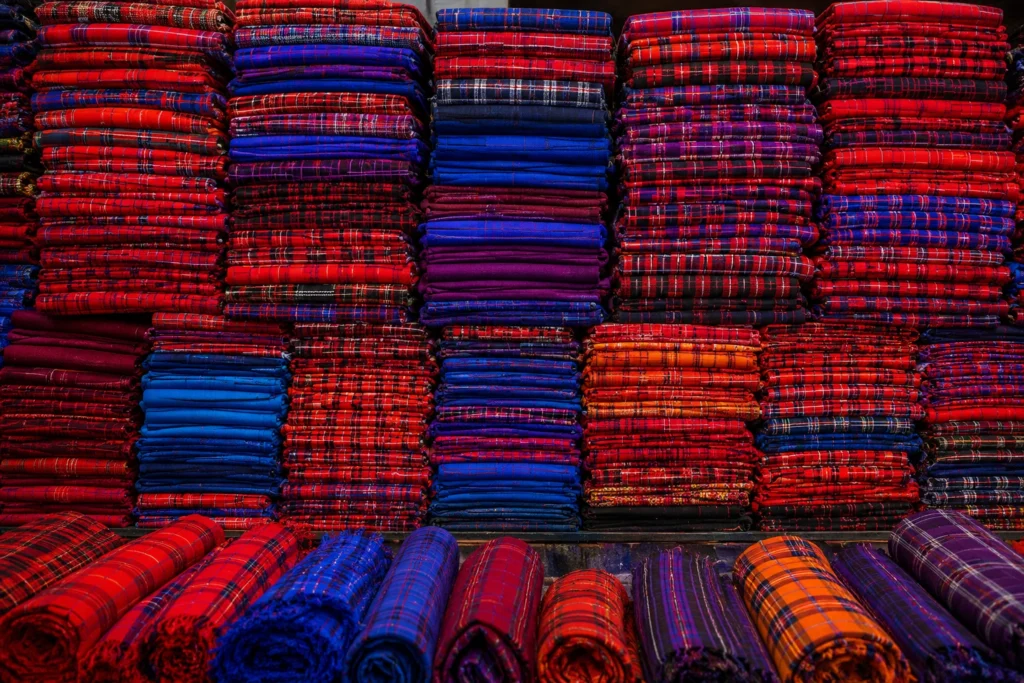
The Maasai shuka is a traditional East African cloth that has grown into a powerful cultural symbol and a modern fashion statement. Known for its bold patterns and striking colors, it is widely used in Kenya and Tanzania, especially by the Maasai community. Today, the Maasai shuka is used not only for cultural identity but also for fashion, travel, home décor, outdoor use, and even modern branding.
In this guide, we explore everything you need to know about the Maasai shuka—its origin, meaning, materials, uses, and what to consider when buying one.
Origin of the Maasai Shuka
The Maasai shuka originates from the Maasai people, a semi-nomadic community found mainly in Kenya and northern Tanzania. Traditionally, Maasai people wore animal skins for clothing. With time and trade, they adopted woven cotton fabrics introduced through commerce.
The most iconic color, red, became a strong symbol of bravery, unity, and strength. Over time, other colors such as blue, green, yellow, black, and patterned designs were introduced, each carrying cultural meaning and aesthetic value.
Today, the Maasai shuka remains a proud representation of Maasai heritage while also becoming a globally recognized textile.
What the Maasai Shuka Is Made Of
Modern Maasai shuka fabrics are made using different materials depending on their purpose:
Traditional Materials: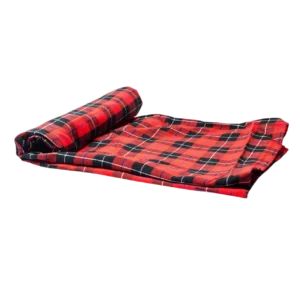
- 100% cotton
- Cotton blends
- Acrylic or polyester blends
These materials make the shuka durable, warm, and suitable for daily and outdoor use.
Modern Innovations:
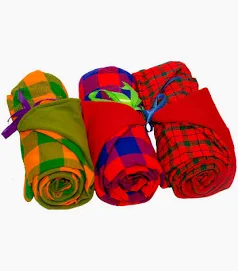
In today’s market, the Maasai shuka has evolved to meet modern needs. Some versions are now made with:
- Fleece lining for extra warmth and softness
- Inner lining fabrics for comfort and better finishing
- Thicker woven materials for cold weather and camping
- Lightweight synthetic blends for fashion and travel
Fleece-lined Maasai shukas are especially popular for safaris, outdoor activities, and colder climates because they combine warmth with traditional design.
Cultural Meaning of the Maasai Shuka
For the Maasai community, the Maasai shuka is more than just cloth—it is identity.
- Red represents bravery, unity, and strength
- Blue symbolizes energy and the sky
- Green represents the land and livestock
- Yellow symbolizes prosperity and fertility
- Black and white patterns represent balance and harmony
It is worn during ceremonies, rituals, and daily life, reflecting deep cultural pride and heritage.
Modern Symbol of Unity and Branding
In the modern world, the Maasai shuka has taken on new meaning beyond tradition.
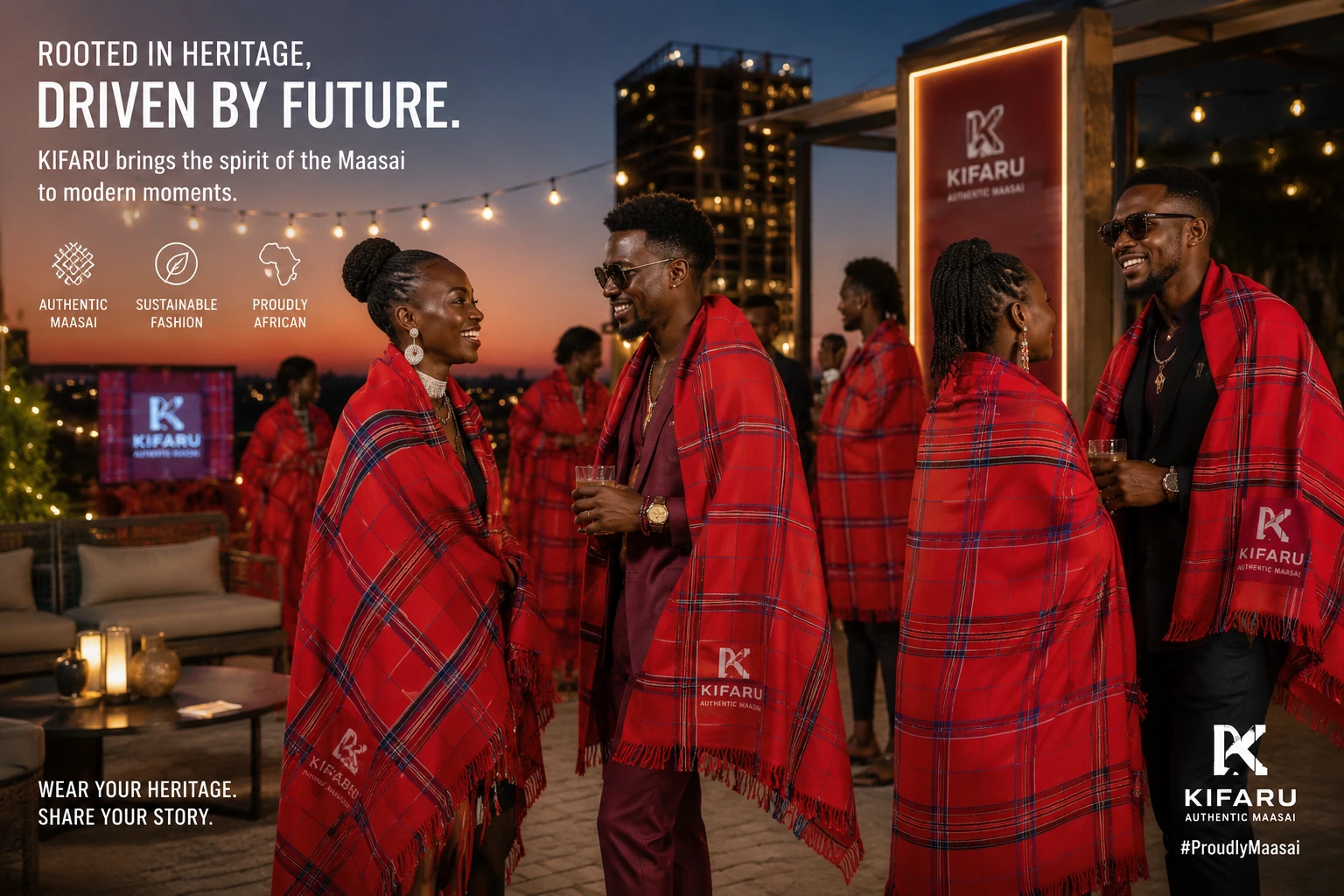
It is now widely used as a symbol of unity in groups, organizations, and communities. Many teams, companies, and institutions choose a specific Maasai shuka color or pattern to create a sense of belonging and togetherness.

It is also used as a powerful marketing and branding tool. Businesses and organizations often:
- Choose matching Maasai shuka colors for staff uniforms
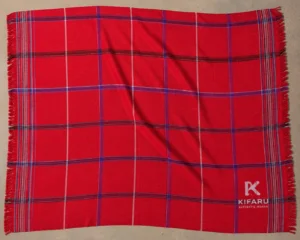
- Print or brand company logos on the fabric
- Use it in marketing campaigns and promotional events
- Create visual identity and brand awareness through consistent color themes
This makes the Maasai shuka not only a cultural fabric but also a modern branding asset that connects tradition with business identity and visual storytelling.
Where and How Maasai Shuka Is Used Today
The Maasai shuka is extremely versatile and used in many ways:
1. Traditional Wear
Used as wraps during ceremonies, weddings, and cultural events.
2. Fashion and Style
Incorporated into jackets, dresses, skirts, scarves, and bags.
3. Travel and Outdoor Use
Used as:
- Safari wear
- Camping blankets
- Travel wraps
- Picnic mats
4. Home Décor
Used for:
- Sofa throws
- Wall décor
- Table covers
- Interior styling
5. Cultural and Tourist Products
Popular as souvenirs representing African heritage.
What to Look for When Buying a Maasai Shuka
When choosing a high-quality Maasai shuka, consider:
1. Fabric Quality
Strong cotton or fleece-lined options depending on your needs.
2. Comfort and Warmth
Fleece-lined versions are best for cold weather, while cotton ones are ideal for everyday use.
3. Color Durability
Good shukas should maintain bright colors without fading.
4. Stitching and Finishing
Well-finished edges ensure durability and prevent fraying.
5. Size
Common sizes like 150 by 200 cm offer versatility.
6. Purpose
Choose based on whether you want fashion, warmth, travel use, or branding.
Who Can Use Maasai Shuka?
The Maasai shuka is suitable for everyone:
- Men and women of all ages
- Tourists and travelers
- Fashion designers
- Outdoor and camping enthusiasts
- Companies and organizations for branding
- Cultural performers and artists
It is a universal fabric that blends tradition, identity, and modern use.
Popular Maasai Shuka Variants
- Red & Black Maasai Shuka – classic bold traditional design
- Green Black Maasai Shuka – earthy natural tones
- Red & Blue Maasai Shuka – vibrant cultural expression
- Red & Black Maasai Shuka – strong identity design
- Red & Black with White Stripes Maasai Shuka – modern patterned style
- Red & Checked Maasai Shuka – traditional check design
- Red & Striped Maasai Shuka – simple bold look
- Red & Yellow Maasai Shuka – bright energetic design
- Yellow & Blue Maasai Shuka – unique modern color mix
Why Maasai Shuka Is So Popular Today
The Maasai shuka continues to grow in popularity because it combines:
- Deep cultural heritage
- Bold African identity
- Modern fashion adaptability
- Practical everyday use
- Branding and unity applications in organizations
- Durability and comfort
Its transformation into fleece-lined and branded versions has made it even more relevant in today’s world.
The Maasai Shuka: A Timeless Fabric Connecting Culture, Unity, and Modern Expression
The Maasai shuka is more than fabric—it is culture, identity, unity, and modern branding combined. From traditional cotton wraps to fleece-lined modern designs, it continues to evolve while preserving its African roots.
Whether used for fashion, travel, warmth, décor, or corporate branding, the Maasai shuka remains one of the most versatile textiles in Africa.
With many color variations like Red & Black Maasai Shuka, Red Yellow Maasai Shuka, and Yellow Blue Maasai Shuka, there is a style for every purpose and personality.
In both traditional and modern settings, the Maasai shuka stands as a powerful symbol of heritage, unity, and visual identity.