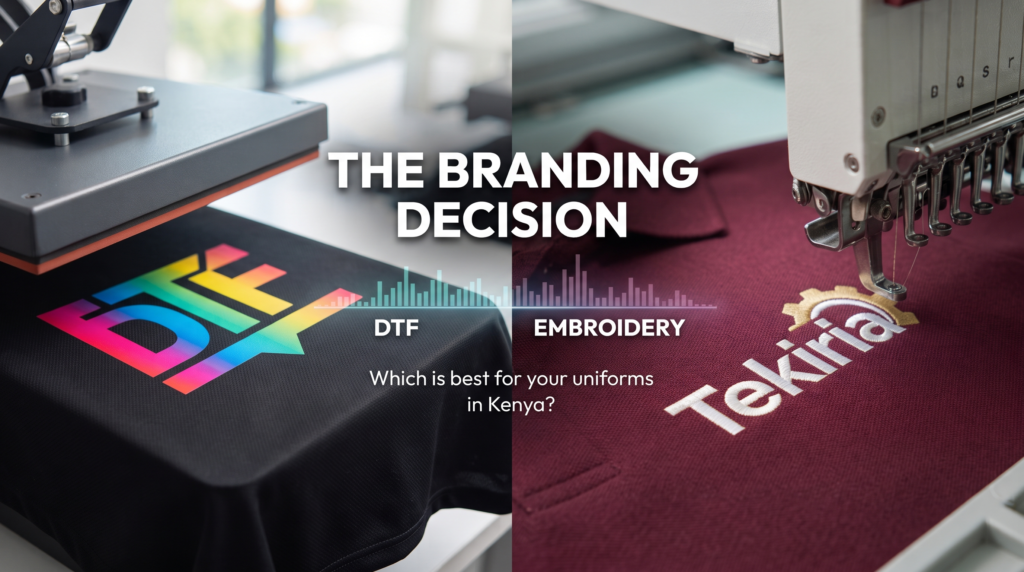
DTF Printing vs. Industrial Embroidery: Which Branding is Best for Your Corporate Uniforms?
When outfitting your team, the quality of your corporate wear speaks volumes about your brand. But buying high-quality apparel is only half the battle; how you customize that apparel is what truly sets your business apart. If you are sourcing workwear in Kenya, you will inevitably face a major decision: DTF printing vs industrial embroidery.
Both methods offer fantastic results, but they serve very different purposes. Choosing the wrong branding method can lead to faded logos, puckered fabrics, and wasted budgets. In this comprehensive guide, we will break down everything you need to know about DTF (Direct-to-Film) printing and industrial embroidery to help you choose the best option for your corporate uniforms.
What is DTF Printing?
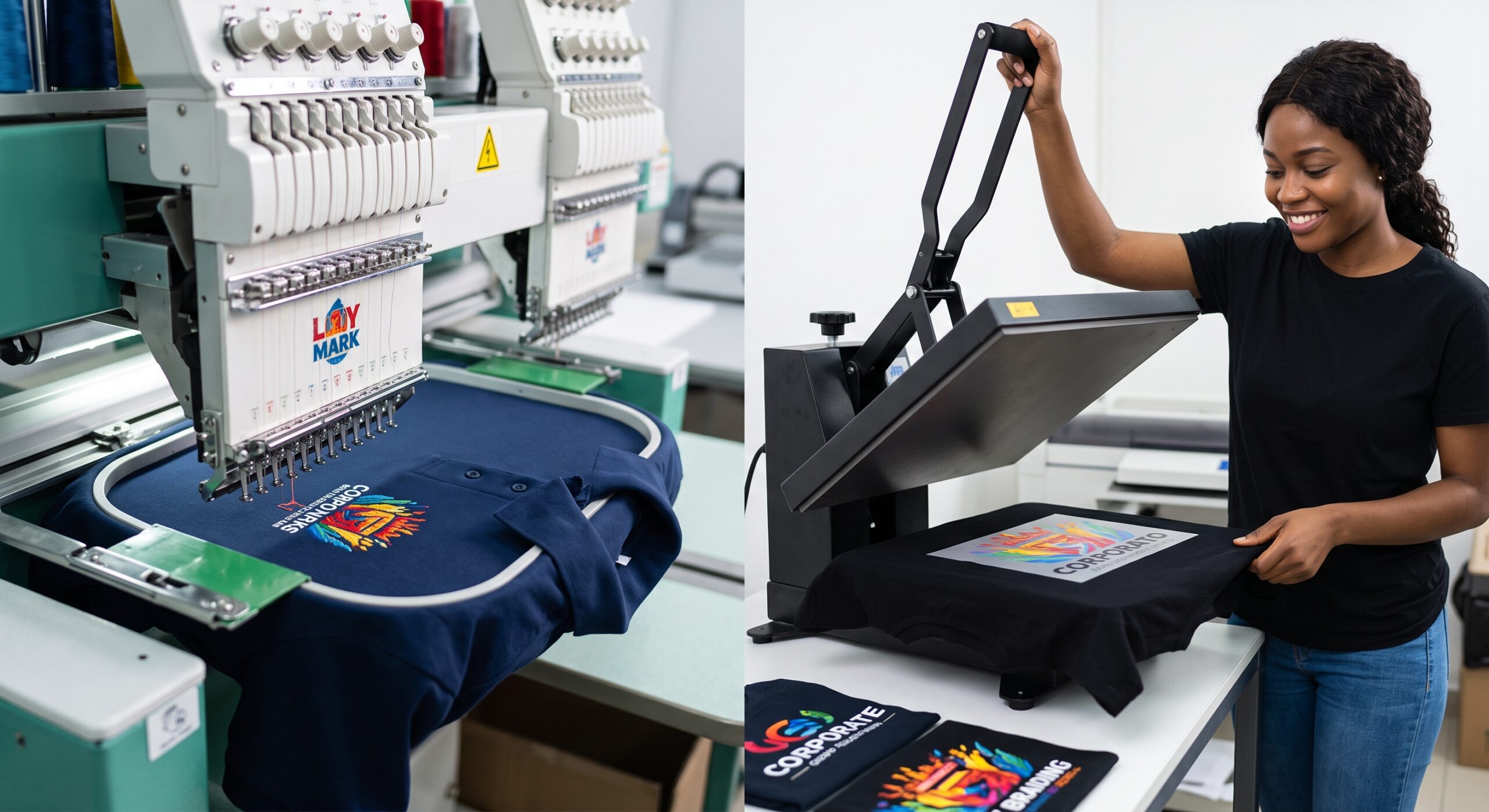
Direct-to-Film (DTF) printing is a modern branding technology that is rapidly taking over the custom apparel industry. The process involves printing a design onto a special transparent film using eco-friendly water-based inks. An adhesive powder is applied to the wet ink, cured under heat, and then the design is heat-pressed directly onto the garment.
Pros of DTF Printing
-
Vibrant, Complex Colors: Unlike traditional screen printing, DTF handles full-color photographs, gradients, and intricate logo details with absolute precision.
-
Versatility Across Fabrics: DTF prints adhere beautifully to cotton, polyester, nylon, and blends. This makes it perfect for safety vests and high-visibility wear as well as standard t-shirts.
-
Cost-Effective for Small Runs: There are no setup fees or screens to burn, making it highly economical whether you are ordering 10 units or 1,000 units.
-
Stretch and Durability: High-quality DTF prints stretch with the fabric and do not crack easily, surviving numerous wash cycles.
Cons of DTF Printing
-
Breathability: Large designs can feel slightly heavy or “plastic-like” on the garment, reducing breathability in the exact spot of the print.
-
Professionalism: While vibrant, printed logos are generally viewed as slightly more casual than threaded embroidery.

What is Industrial Embroidery?
Industrial embroidery is the classic, gold-standard method for corporate uniform branding. It uses heavy-duty, computerized sewing machines to stitch your logo directly into the fabric using durable polyester or rayon threads.
Pros of Industrial Embroidery
-
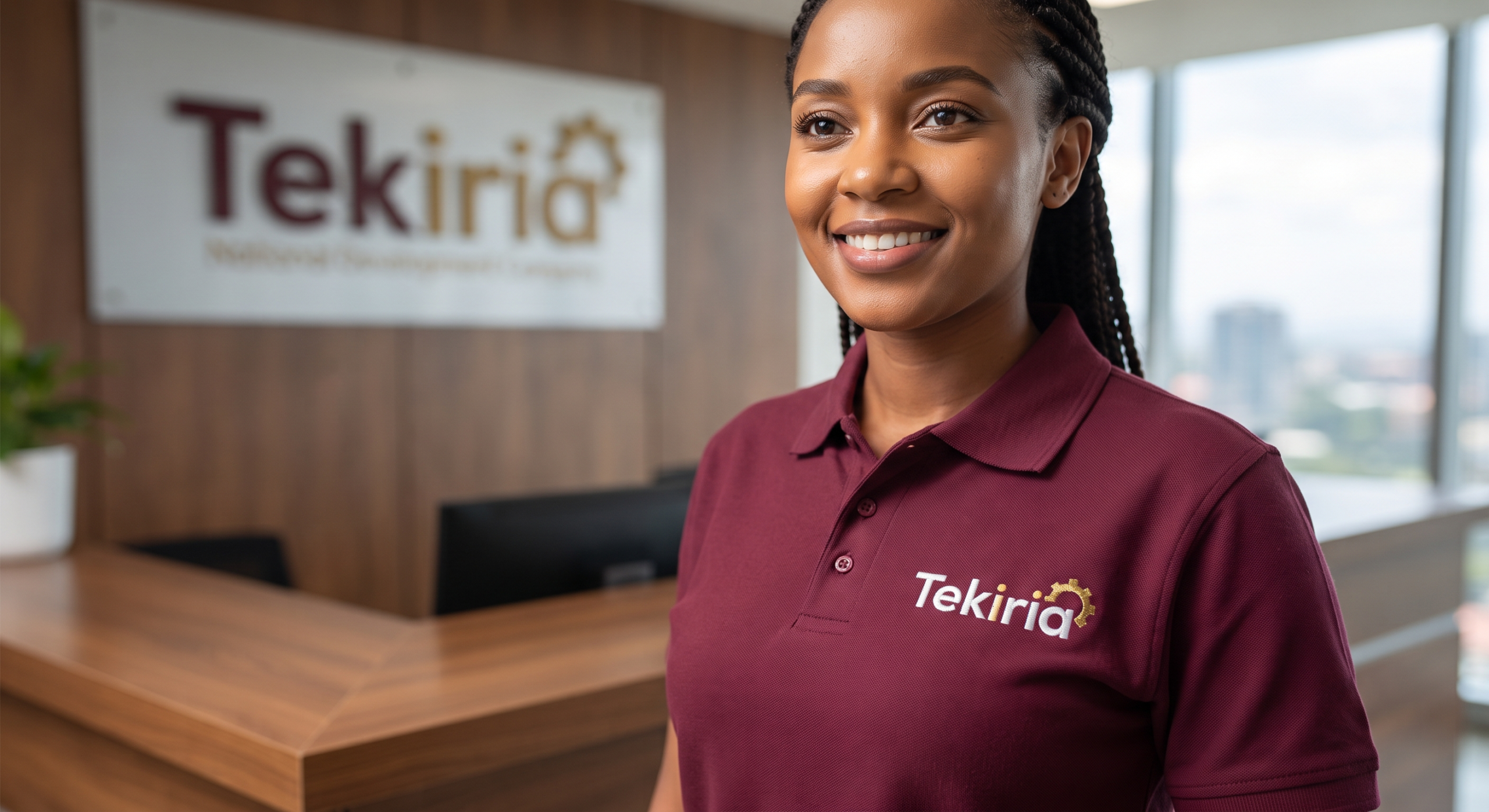
Premium, Professional Look: Nothing beats the 3D, textured appearance of an embroidered logo. It immediately elevates the perceived value of the uniform and establishes trust.
-
Incredible Durability: Embroidery often outlasts the garment itself. It will not peel, crack, or fade in the sun, making it ideal for heavy-duty workwear and overalls.
-
Perfect for Thicker Garments: Embroidery works flawlessly on polos, fleece jackets, aprons, and caps.
-
Wash and Wear: Embroidered garments can withstand harsh industrial washing environments without losing their shape or color.
Cons of Industrial Embroidery
-
Design Limitations: Gradients, drop shadows, and extremely tiny texts (under 5mm) cannot be accurately reproduced with thread.
-
Fabric Constraints: Embroidery does not work well on thin fabrics (like lightweight t-shirts), as the heavy thread can cause the material to pucker or tear.
-
Cost for Large Logos: Pricing is based on “stitch count.” While a small chest logo is very affordable, a massive logo across the back of a jacket can become expensive.
DTF Printing vs Industrial Embroidery: The Ultimate Comparison
To make the best choice for your team in Kenya, let’s compare these two powerhouses head-to-head across four crucial categories.
1. Fabric and Garment Type
-
Choose Embroidery for: Polo shirts, corporate button-down shirts, aprons, dustcoats, caps, and heavy jackets.
-
Choose DTF Printing for: Standard cotton t-shirts, raincoats, high-visibility reflector vests, and activewear/tracksuits.
2. Design Complexity
-
Choose Embroidery if: Your logo is solid, vector-based, and relies on standard brand colors without gradients.
-
Choose DTF Printing if: Your design features photographs, watercolor effects, fine details, or multiple fading color transitions.
3. Durability and Working Conditions
If your staff works outdoors in harsh conditions (construction, roadwork, manufacturing), industrial embroidery is usually the safest bet for longevity. It withstands dirt, heavy friction, and intense sunlight. However, if your staff needs waterproof gear, DTF printing is superior because embroidery needles puncture the fabric, compromising water resistance.
For more on international standards for garment care, you can read the ISO textile care labeling guidelines.
4. Budget and Size of Logo
If you want a large logo on the back of a hoodie or dustcoat, DTF printing will be vastly more cost-effective. If you just need a standard left-chest logo, the pricing between DTF and embroidery is highly competitive, and the choice should come down to aesthetics.
Why Choose Tekiria for Your Corporate Uniform Branding?
At Tekiria, we don’t just supply high-quality Personal Protective Equipment (PPE) and corporate uniforms; we finish them to perfection. Because we handle our branding in-house, we control the quality from start to finish.
We understand that procurement managers need reliable, durable, and cost-effective solutions. Whether you are outfitting a hotel staff in crisp embroidered aprons or outfitting a logistics team in brightly printed reflector vests, our team guides you on the right choice.
Are you ready to elevate your team’s image? Don’t leave your brand identity to chance. Contact our branding experts at Tekiria today or browse our extensive range of corporate uniforms to find the perfect fit for your business.